

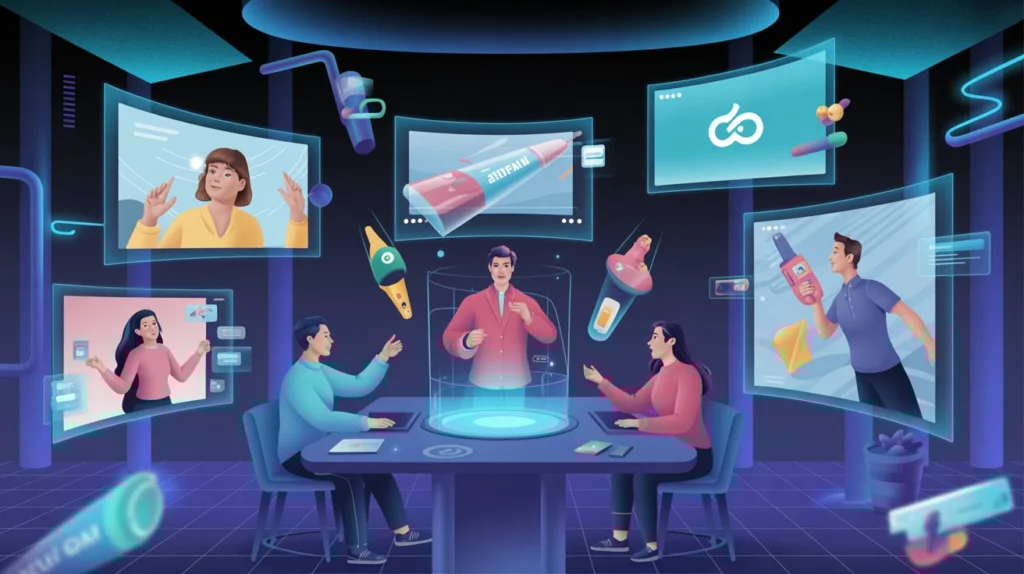
Video animation has become one of the most powerful communication tools in today’s fast-paced digital world. Unlike traditional text or static images, animated videos combine visual storytelling, motion, audio, and creativity to deliver messages that instantly capture attention. From entertainment to education to marketing, animation simplifies complex ideas and makes them engaging, memorable, and easy to understand. As social media platforms grow more competitive, businesses and creators increasingly rely on video animation to stand out. Whether it’s a short explainer video or a sophisticated 3D project, animation offers endless opportunities to express ideas in ways live-action footage cannot. The evolution of technology, combined with user-friendly software, has made animation more accessible, allowing individuals and companies of all sizes to benefit from its impact.
Video animation comes in several styles, each with its own strengths and ideal uses. 2D animation, one of the most popular formats, uses flat, illustrated characters and scenes to create simple, expressive movements that are perfect for explainer videos, educational content, and advertisements. 3D animation brings depth, realism, and lifelike quality, making it ideal for films, product demonstrations, architectural walkthroughs, and video games. Motion graphics focus on animated text, shapes, and graphics and are often used for corporate videos, presentations, and branding campaigns. Whiteboard animation, which simulates drawings created on a whiteboard, is especially effective for storytelling and instructional materials. Meanwhile, stop-motion animation, created by photographing objects frame by frame, offers a charming, handcrafted look unique to artistic and creative projects. Each type of animation serves different industries—from healthcare to e-commerce—and choosing the right style depends on the message, audience, and budget.
In a competitive marketplace, businesses need innovative ways to grab and retain the attention of consumers, and Animated commercial videos have proven to deliver exceptional results. Companies use video animation to explain their products or services clearly, showcase brand values, and increase engagement across social media platforms. Studies consistently show that animated content boosts conversion rates, enhances user retention, and improves website performance. Animation allows businesses to visualize ideas that would be too expensive or impractical to film in real life—making it perfect for industries such as technology, finance, medicine, and engineering. Additionally, animated videos are easier to update than live-action footage, which helps keep marketing materials relevant over time. As more consumers prefer video over text, animation has become a cost-effective, high-impact strategy for businesses aiming to build brand awareness and drive growth.
Producing a high-quality animated video involves a structured creative process that blends strategy, storytelling, and technical skill. It typically begins with concept development, where goals, audience, and core messages are defined. This is followed by writing a detailed script and creating a storyboard to visualize scenes and transitions. The next stage involves design, where characters, backgrounds, and visual elements are illustrated based on the chosen animation style. Once the visuals are ready, animators bring them to life using specialized software, synchronizing actions with voiceovers, sound effects, and background music. The final stage includes editing, revising, and rendering the video in the required format. The animation workflow requires collaboration between writers, designers, animators, and audio engineers, each contributing expertise to achieve a polished final product. The more refined the process, the more compelling and effective the animated video becomes.
The future of video animation is incredibly promising as technology continues to advance at an extraordinary pace. Artificial intelligence, motion-capture systems, and real-time rendering tools are transforming animation workflows, making production faster, more sophisticated, and more accessible. AI-powered platforms can now assist with lip-syncing, character movements, storyboarding, and even generating entire scenes, reducing the workload for animators while speeding up content creation. Virtual reality (VR) and augmented reality (AR) are also expanding the possibilities of animated storytelling, allowing users to step inside immersive worlds and interact with animated characters. As global demand for digital content continues to rise, animation will play a central role in education, marketing, entertainment, and communication. Its versatility, creativity, and ability to simplify complex ideas ensure that video animation will remain a powerful tool for connecting with audiences around the world.